Stair Safety for Elderly Adults - Reducing the Risk of Falls at Home
For many seniors aging in the comfort of their own homes, stairs can become one of the most challenging areas of the home. Changes in balance, vision, strength, mobility, and reaction time as we age may increase the likelihood of a fall when going up or down stairs, whether indoors or outdoors. While stairs are a normal part of daily life for many people, they can quickly become dangerous when proper safety measures are not in place.
Falls for seniors remain one of the leading causes of injuries, and stair-related accidents can result in life-changing consequences. Broken bones, head injuries, hospitalizations, and a loss of confidence living alone at home can make recovery difficult, and even impossible without assistance from family or professional caregiving.
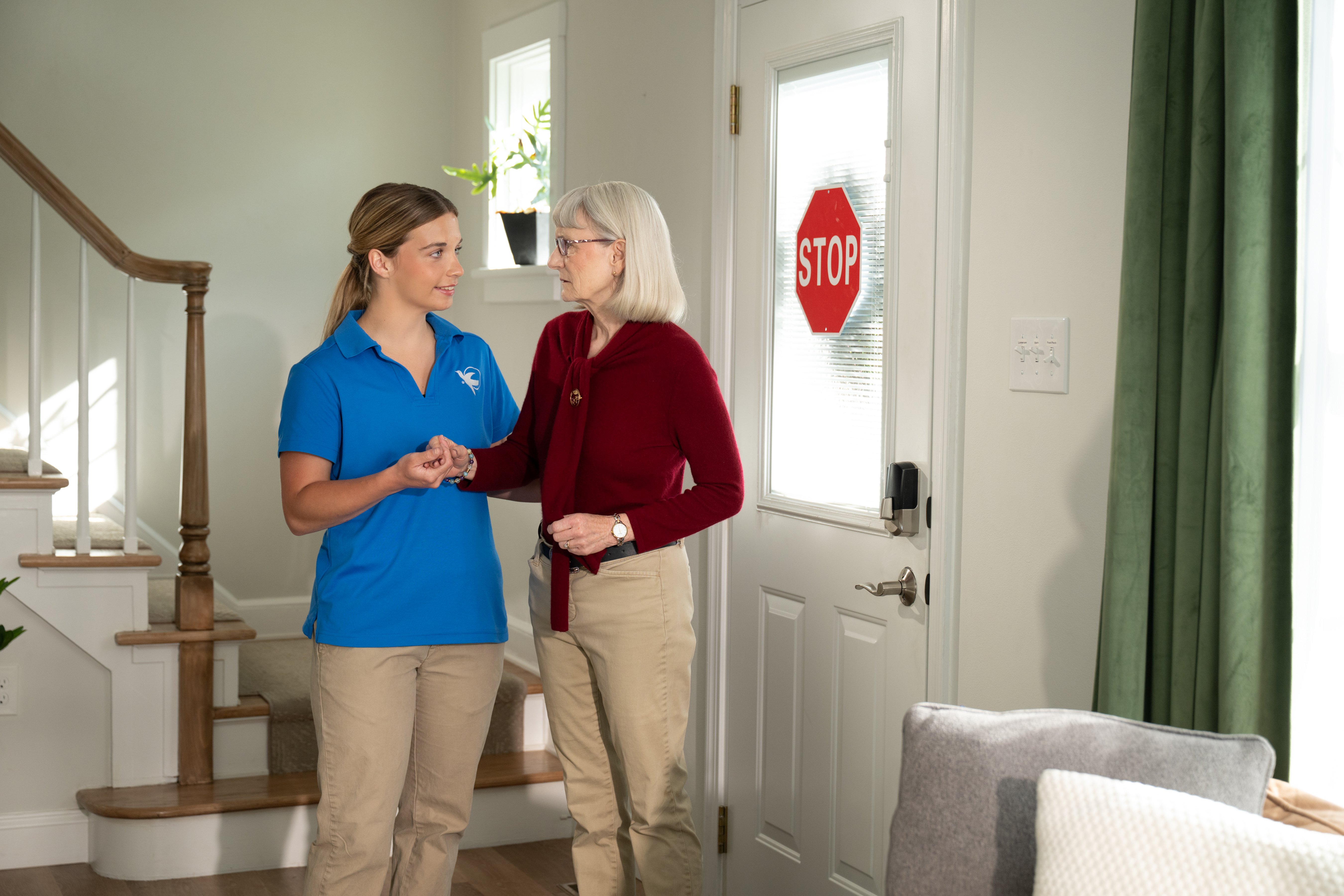
At Senior Home Care by Angels, we understand that maintaining a safe home environment is a necessity as people age in place. Our caregivers help seniors remain living independently at home by providing compassionate senior home care and support with daily activities, while also helping families identify potential safety concerns, including fall risks associated with stairs and mobility challenges.
Understanding the Challenges of the Elderly and Stairs
As people age, everyday living activities that once felt simple may require more effort, concentration, and support for balance. The combination of the elderly and stairs can be particularly challenging, as walking up and down steps inside or outside the home requires coordination, muscle strength, balance, and depth perception. Even a small misstep on the stairs can lead to a dangerous fall with serious consequences. There are several factors that may increase the risk of stair accidents among older adults, including:
- Reduced leg strength
- Arthritis and joint pain
- Vision changes
- Poor balance
- Dizziness or vertigo
- Side effects from medications
- Neurological or cognitive conditions such as Parkinson's, Alzheimer’s, or dementia
- Recovery from surgery or illness
When these mobility and cognitive challenges are combined with other factors, the risk becomes even greater for seniors living at home. Some other factors that can lead to stair falls and injuries for seniors include:
- Poorly maintained stairs
- Loose carpeting
- Inadequate lighting
- Missing handrails
- The risk becomes even greater
Common Consequences of Elderly Falling Down Stairs
Many people think of falls as minor accidents, but the elderly falling down stairs at home can result in severe or even life-threatening injuries. Unlike younger people, seniors are more susceptible to sustaining fractures when they fall and require longer recovery periods. Common elderly falling down stairs injuries include:
- Hip fractures
- Wrist and arm fractures
- Traumatic brain injuries
- Back injuries
- Shoulder injuries
- Soft tissue damage
Beyond physical injuries, a fall can have emotional effects on seniors. Some older adults become fearful of using stairs after an accident. This fear can have a huge impact on a senior’s confidence and lead to reduced activity, social isolation, and a loss of independence. Implementing proper stair safety for elderly individuals can help prevent falls, which is far easier than recovering afterward.
How to Make Stairs Safer for Elderly Family Members
Many senior-related stair accidents can be prevented through practical modifications and the addition of safety features. When looking at how to make stairs safer for elderly family members, small changes to the areas around steps (whether inside or outside the home) often make a significant difference in their day-to-day safety.
Install Secure Handrails
Handrails provide stability and support for seniors when walking up or down stairs. Ideally, handrails should be installed on both sides of the staircase so seniors can grab them with one or both hands to support their balance.
Handrails should be:
- Securely attached
- Easy to grip
- Continuous from top to bottom
- Free from sharp edges or obstructions
Family members can help encourage seniors to use the handrails every time they use the stairs to prevent falls from occurring.
Remove Tripping Hazards
Clutter and loose items on stairs create unnecessary risks that could lead to a senior tripping and falling down the stairs.
Common stairway hazards include:
- Shoes
- Books
- Laundry baskets
- Electrical cords
- Rugs
- Decorative items
- Pet toys
Improve Stair Visibility
Adding contrast to the stairway can help seniors better distinguish each step. Some homeowners and family members of seniors choose to:
- Add contrasting strips to stair edges
- Paint stair nosings a different colour
- Install non-slip stair treads
- Place reflective strips along the stairs
- Replace worn carpeting
Stair Safety for Elderly Adults Starts With Better Lighting
Good visibility around stairways plays a major part in preventing falls. Often, accidents occur when stairs lack proper lighting. Poor lighting can make it difficult to see stair edges, obstacles on the steps, or the depth of each stair.
Simple improvements include:
- Installing brighter bulbs in stairwells
- Adding light switches at both the top and bottom of the stairs
- Using motion-activated lighting
- Replacing burned-out bulbs immediately
- Making sure stairways remain well-lit during evening hours
Even a familiar stairway that a senior has walked on many times over the years can become dangerous when shadows make it difficult to judge depth and distance.
Safe Stairs for Elderly Adults Require Regular Maintenance
Maintaining safe stairs for elderly residents starts with basic structural integrity. A sound staircase is much safer for seniors to walk on than one with visible signs of wear and tear.
Regular stairway inspections should check for:
- Loose railings
- Worn carpet
- Uneven steps
- Cracked stair treads
- Slippery surfaces
- Loose flooring materials
How to Modify Stairs for Elderly Individuals With Mobility Challenges
Some seniors experience significant mobility limitations as they age, which makes traditional stairs difficult or unsafe to use. In these situations, adding stair modifications may help ensure a senior’s safety when using the stairs. Common stair safety modifications include:
Stair Lifts
A stair lift is a device that allows a person to travel between floors while seated. Seniors sit in the seat, and the stair lift systems allow them to travel up and down the stairs without having to walk. These systems can be particularly useful for seniors who have arthritis, balance issues, or limited lower-body strength.
Additional Grab Bars
Strategically placing grab bars or additional handrails near stair landings can provide extra support when a senior is transitioning on and off the staircase.
Wider Handrails
Some older adults find that having wider, easier-to-grip handrails is more comfortable, secure, and easier to use than standard options.
Non-Slip Surfaces
Installing slip-resistant stair coverings may also improve traction and reduce the risk of a senior losing their footing on the stairs.
When considering how to modify stairs for elderly loved ones, our team at Senior Home Care by Angels can help identify potential safety concerns and provide feedback on what a senior is struggling with when using the stairs. We provide this as part of our home care assessment, which we conduct with each senior.
Why Old People Falling Down Stairs Often Happens During Daily Routines
Many stair accidents involving seniors occur during routine daily activities rather than in unusual situations. Carrying groceries, rushing to answer a phone call, or transporting laundry can easily lead to distraction, which is a leading cause of old people falling down stairs. To minimize these risks, older adults who are living in a home with stairs should be encouraged to:
- Move slowly and deliberately
- Keep at least one hand on the handrail
- Avoid carrying large or heavy items up stairs
- Wear supportive footwear
- Avoid using stairs in socks alone
- Take breaks if fatigue develops
Instilling simple habits when going up or coming down stairs can play an important role in reducing fall risk for seniors.
Home Care Support and Stair Safety for Elderly Adults
For seniors who need additional support as they age in place, our home care services can provide valuable assistance with daily activities while also identifying potential fall hazards around the home.
Caregivers from our team at Senior Home Care by Angels can help seniors with various tasks and movements, including:
- Mobility support
- Personal hygiene routines
- Light housekeeping that keeps stairways clear
- Companionship
- Meal preparation
- Grocery shopping
- Monitoring changes in mobility that may increase fall risks
- Much more
Family members of seniors living at home often gain peace of mind knowing someone from our team is helping their loved one remain safe at home, especially when using the stairs.
At Senior Home Care by Angels, we understand the challenges seniors face when the stairs become a safety concern, especially if they are living alone at home. Our compassionate caregivers help seniors maintain their independence while also supporting a safer home environment. Through our personalized non-medical home care services, we help seniors continue living comfortably and confidently in the place they know best, and give their families peace of mind.
Don’t hesitate to contact a Senior Home Care by Angels office near you for a free in-home consultation to learn more about how we can help your senior loved one live comfortably and safely at home.